Yoga represents the union of opposites—effort and ease, strength and flexibility—and this class is designed to help you find that perfect balance through both movement and stillness. We begin with a slower-paced Vinyasa flow for the first half of the session to warm the body and build mindful heat, before transitioning into a series of restorative poses supported by props. This intentional shift allows you to release deep-seated tension and dive into a state of chill.
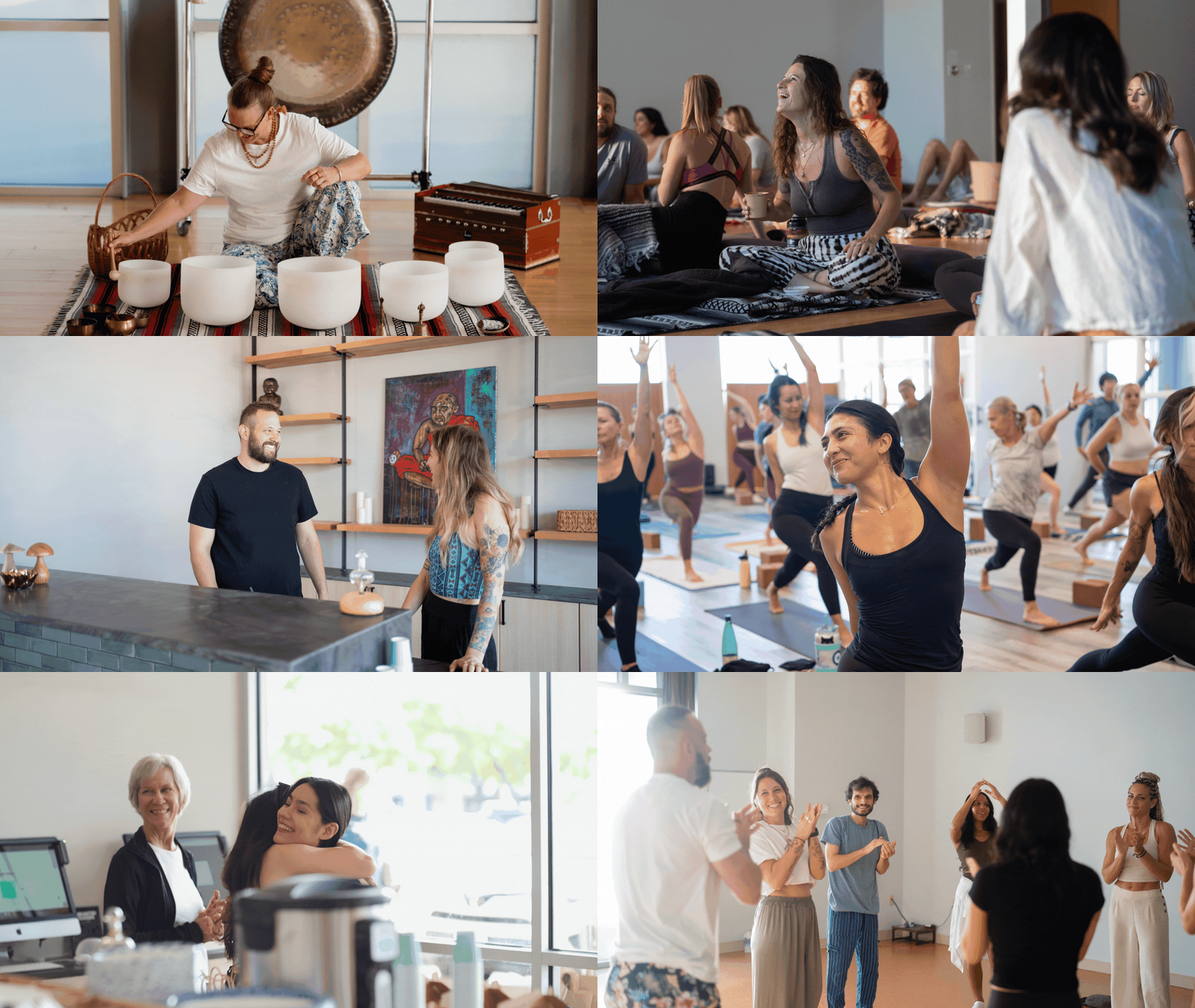
Some classes may be enhanced with sound healing, breathwork, or meditation.
at Flow Yoga Westgate
FAQ
How often you practice yoga is like how often you brush your teeth. Ideally, you should aim for at least 3-5 times a week for optimal benefits, but even once a week is better than nothing. Just like brushing your teeth, the more you do it, the better you'll feel. And trust me, nobody likes a smelly yogi.
Well, imagine trying to pat your head and rub your belly at the same time. Now imagine doing that while standing on one leg and reciting the alphabet backward. That's what yoga does for your coordination – it teaches you to be a multitasking ninja, gracefully moving through poses while keeping your balance and focus.
Yoga for mental health and emotional healing is like a warm hug for your soul. It can help reduce stress, anxiety, and depression, while also promoting self-awareness and inner calm. It's like a mental health spa day, but without the cucumber slices and fancy robes.
Yoga is like a dance with your body, while meditation is a dance with your mind. Both practices can help you feel more centered and calm, but yoga incorporates physical movement, while meditation is more focused on stillness and introspection.
Yoga helps with strength like a personal trainer, only without the weight machines and mirrors. It can help you build lean muscle mass, increase flexibility, and improve overall body composition. Plus, it's a lot more peaceful than a crowded gym.
Try it out
Get to know Flow with unlimited access to all classes at any Flow studio for 30 days
Unlimited Classes for $30